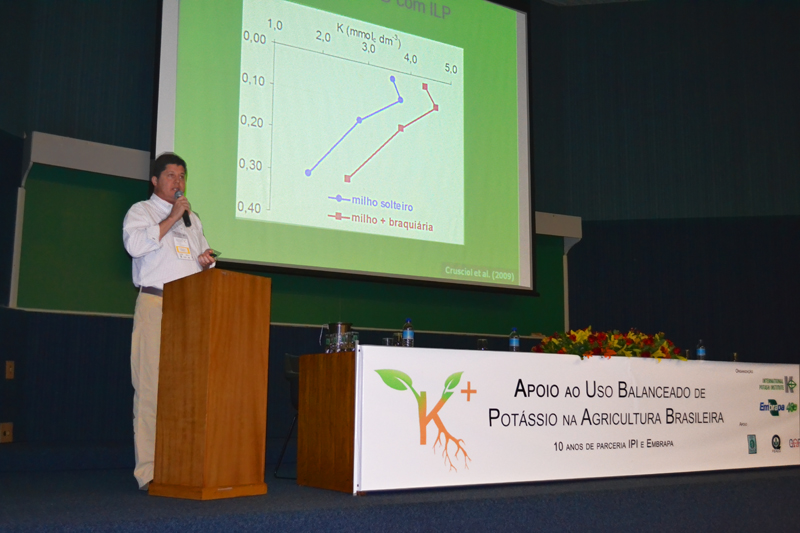
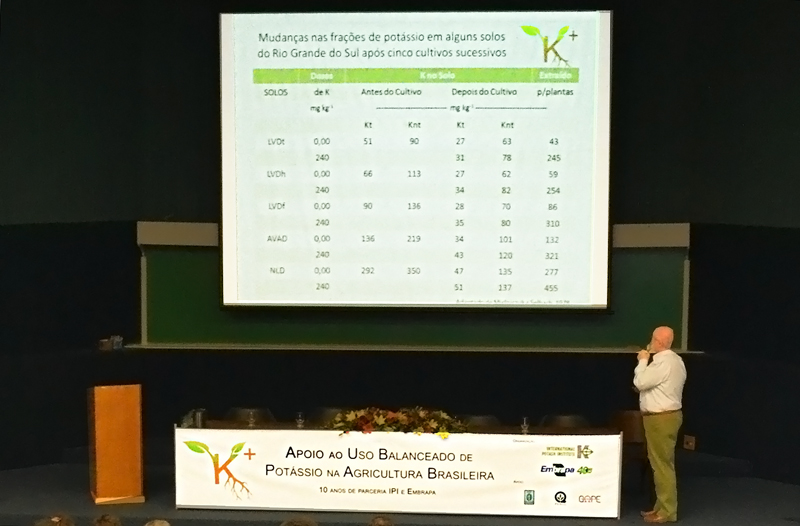
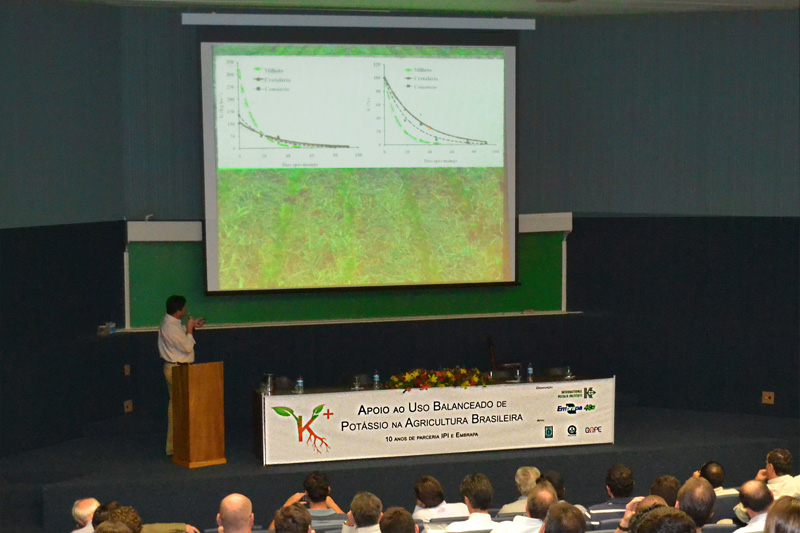
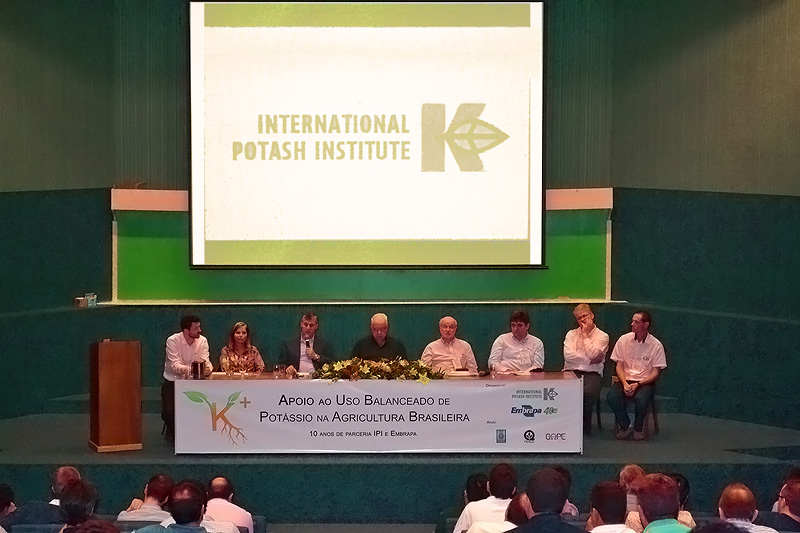
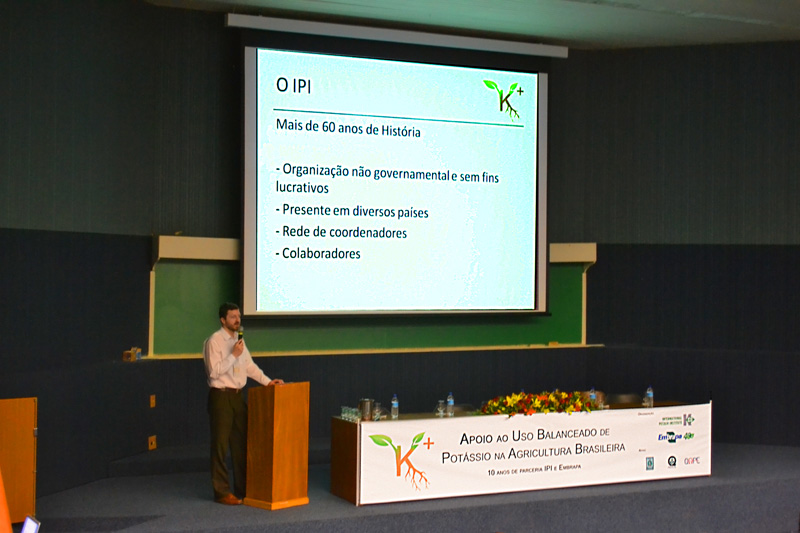
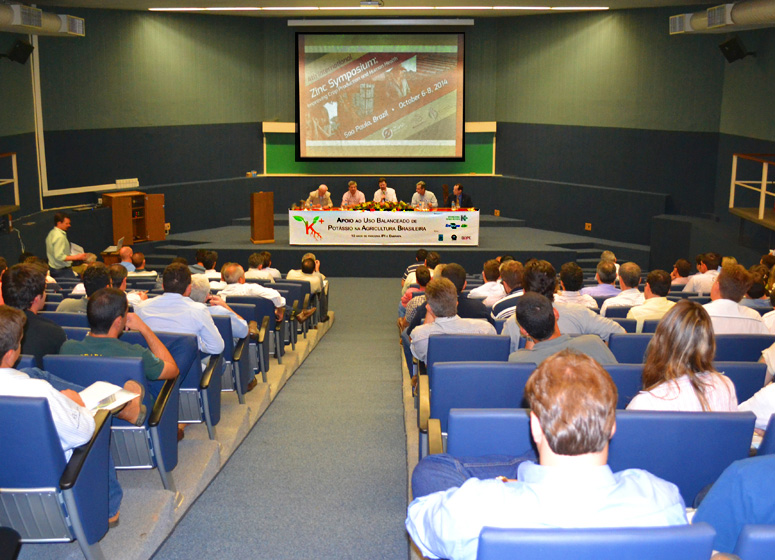
On 9-10 October 2013, the International Potash Institute (IPI) and the Brazilian Agricultural Research Corporation (Embrapa), led by Dr. Toni Wiendl and Dr. Ronaldo Oliveira respectively, hosted the “Support Balanced Use of Potassium in Brazilian Agriculture” symposium in Piracicaba, SP. The event aimed to provide information and give the participants a platform to discuss theoretical and practical considerations for the correct application of potash in Brazilian agriculture, as well as to consider fertilisation issues which relate, directly and indirectly, to sustainability and profitability of the agricultural sector.
The event was backed by the Support Group for Research and Extension (GAPE) and Luiz de Queiroz College of Agriculture (ESALQ) of the University of São Paulo (USP). More than 170 participants attended, including 25 leading experts from several research centers and institutes in Brazil and abroad, such as Agroconsult, APTA, CENA, Embrapa, ESALQ, Fund ABC, Fund MT, INTA, IPI, IPNI, MAPA, SNP, TecFertil, U of M, UAAAN, UEVORA, UFSM and UNESP. Their contributions enhanced the participants’ understanding of a wide range of subjects, including potassium fertilisation of soil, and crops and systems management. The speakers and participants’ leading industry positions facilitated a full and interesting discussion on these topics, which had not occurred in Brazil for many years.
The speaker list was drawn from a number of countries, which allowed the participants to compare potassium usage methodologies around the globe. International speakers included Dr. Fabián Fernandez (Minnesota University, United States), who covered best management practices for crop nutrition in the American Corn Belt; Dr. Marco Antonio Bustamante (Antonio Narro University, Mexico), who spoke about the importance of potash and its use in Mexico, and Dr. José Rafael Marques (Évora University, Portugal), who made a presentation on the impact of the spatial and temporal patterns of potassium in differentiated management of permanent pasture. The local speakers, including Mr. Fernando Carvalho (Min. of Agriculture), Dr. Godofredo Vitti (ESALQ), Dr. Luis Prochnow (IPNI) and Mr. Orlando Martins (SNP),as well as Embrapa’s renowned researchers, discussed key aspects of efficient use of potash, its importance, and the unquestionable need for it in Brazilian agriculture.
Further information, including the expanded abstracts, presentations summaries and the presentations themselves, can be found on the IPI website (http://www.ipipotash.org/).