A two-day seminar on 28-29 May 2013was organised jointly by the Indian Institute of Sugarcane Research (IISR), Lucknow University and the Association of Sugarcane Technologists of India. It took place at the Sugar Beet Breeding Outpost of IISR at the Mukteshwar campus of the Indian Veterinary Research Institute (IVRI) in Nainital. The seminar was focused on the present state and future outlook of the sugar beet industry in India. Major sugar beet and sugar cane researchers and industry players participated in brain storming sessions over the two days.
 Opening session of the Sugar Beet Seminar
The opening session was chaired by Dr. Shivajirao Deshmukh, Director General of Vasantdad a Sugar Institute (VSI) in Pune, together with Dr. A.D. Pathak, the Organising Secretary, and other senior scientists from IVRI in Mukteshwar.
During the session, Dr. P K Singh of IISR briefed the participants on recent industry events while Dr. Pathak gave a detailed presentation on sugar beet research and development in India. Dr. Deshmukh discussed the reduction of sugarcane acreages and subsequent increase in sugar consumption in India that had led to a gap in demand and supply. He emphasised that this gap may be filled by sugar beet and he asked the industry to increase its focus on this.
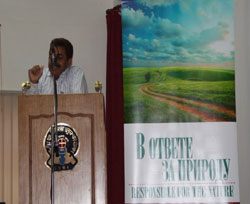 | 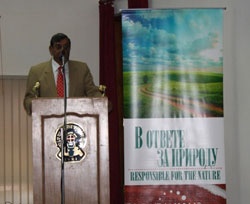 |
| Dr. A.D. Pathak address at opening session | Dr. Shivajirao Deshmukh DG-VSI during his opening remarks |
After the opening session, all corporate sponsors were honoured and received an IISR Diamond Jubilee memento. BPC, as silver sponsor of the event, was one of the recipients.

In the technical session, two lectures were presented entitled ‘Current status’ by Dr.Pathak and ‘Sugar beet Economics’ by Dr. A.K. Singh, Principal Scientist in Agronomy at IISR. These lectures led to a detailed discussion by the participants on various aspects of the sugar beet industry.
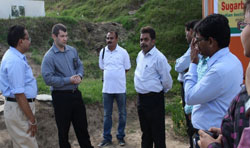
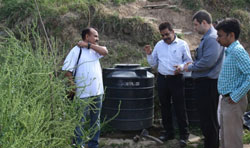
After lunch, there was a field trip to an IISR sugar beet breeding outpost, which was attended by Alexy Scherbakov.
 |  |
Following the site visit, technical presentations were given by scientists from VSI, the Sugarcane Research Centre in Maharastra, and sugar beet agronomists from Bangladesh and Vietnam.
 Participants of Sugar Beet Seminar at Breeding Outpost
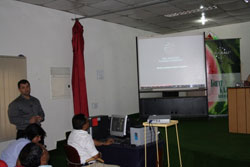
The second day (29 May 2013) was devoted to industry participants. Alexy Scherbakov gave a lecture and spoke in detail about BPC as a global leader in the trade of potassium. This was followed by sessionsgiven by Dr. Kulkarni of JK Seeds, D.K.Rana from JK Seeds and myself.
These lectures focused on the role and benefits of potassium in sugar beet, the importance of potassium – particularly muriate of potash (MOP) - in sugar beet nutrition, and how potassium nutrition reduces stress and diseases to produce high quality sugar beet. The presentations also inspired researchers to continue their fertiliser research to encourage uptake of the crop.
 | 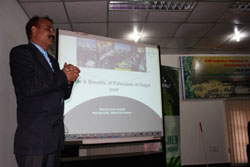 |
I quoted several scientific findings including the results of the IPI project results from Ukraine which focused on yield and sugar quality of sugar beet. This was appreciated by the audience.
Mohan Bajeekar, S.S. Bath and Sandhya werethe other principal speakers from the corporate sector. They spoke in detail about how sugar beet cultivation will be accelerated and its importance will also be understood by industry. Fodder sugar beet is also a new paradigm especially in problem soils (high pH).
The plenary session, chaired by Dr. S. Solomon, Director of the IISR, culminated in the formulation of recommendations to further investigatebalanced fertilisation. Potassium nutrition in particular was accepted as a standard solution in agrotechnology.
CONCLUSION:
1. Participation in this event provided the opportunity to interact with over 50 researchers and those working in sugar research in India, Bangladesh and Vietnam.
2. This seminar included scientists from IISR; Lucknow University; VSI, Pune; GBPUA & T, Pant Nagar; Punjab Agriculture University; Bangladesh Sugarcane Research Institute; Directorate of Sugarcane Development, Ministry of Agriculture, India; and others.
3. The seminar was also a platform to meet principal seed company’s breeders and their staff.
4. The event facilitated interaction with the sugar industry which is very important in terms of potassium consumption.
by Neeraj AwasthiMore photos are available the album on our Facebook page.